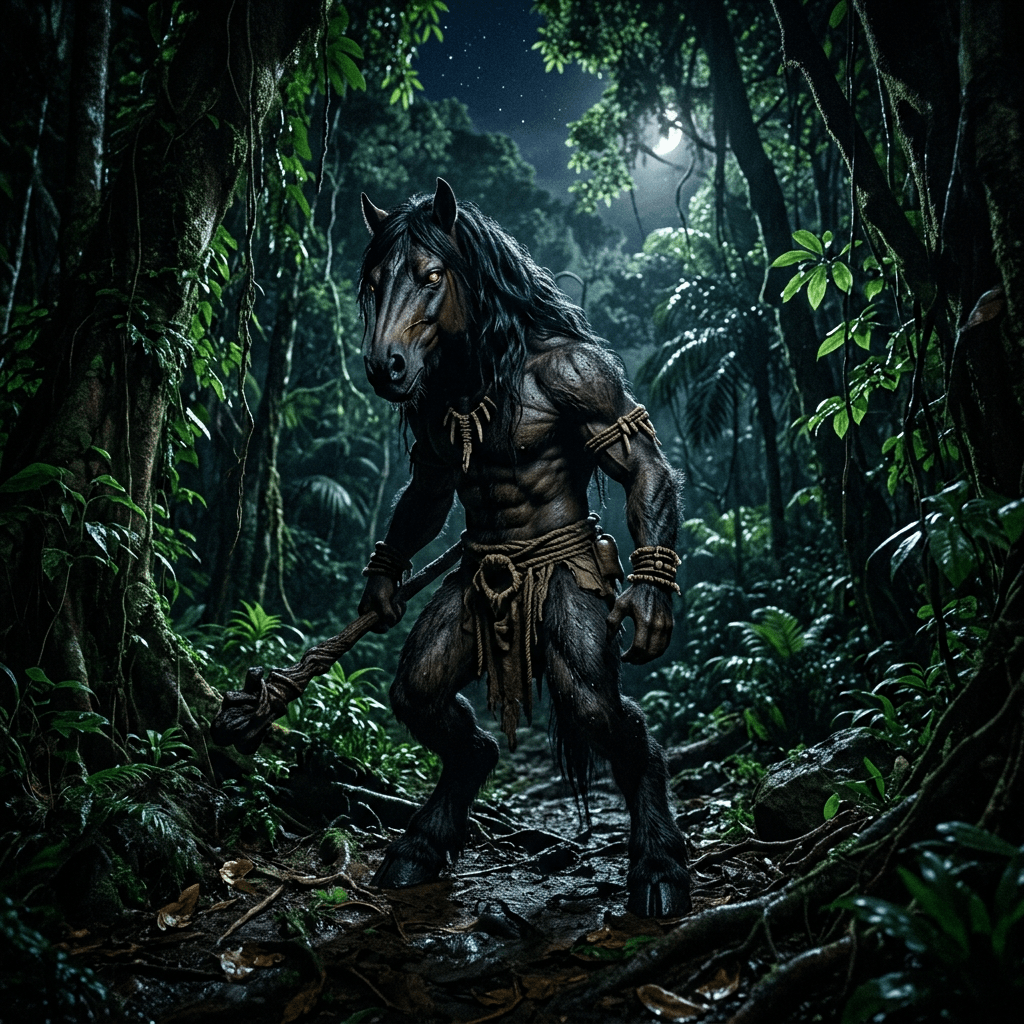
Deep within the forests and mountains of the Philippines lurks one of the most fascinating creatures in Filipino mythology, the Tikbalang. Known for its tall humanoid body and horse-like head, the Tikbalang has long been a symbol of mystery, mischief, and the supernatural in Philippine folklore.
What is a Tikbalang?
The Tikbalang is often described as a towering creature with the head and hooves of a horse and the body of a man. Its limbs are unusually long, allowing it to stride through forests with eerie speed. In many legends, the creature dwells in remote mountains, thick jungles, and ancient balete trees.
According to traditional stories, the Tikbalang enjoys playing tricks on travelers. It can lead people astray, causing them to become hopelessly lost in the woods, even when they are familiar with the path. Victims may feel as though they are walking in circles for hours without escape.
Powers and Supernatural Traits
The Tikbalang is associated with illusion and deception. Some tales claim it can alter its appearance or create phantom sounds to confuse humans. Others believe it possesses immense strength and supernatural agility.
One of the most intriguing legends says that a Tikbalang has three magical golden hairs hidden within its mane. If someone manages to pluck these hairs, they can gain control over the creature and make it serve them.
In Filipino superstition, people who suspect a Tikbalang is leading them astray are advised to wear their shirt inside out or ask permission aloud before entering forests or unfamiliar places.
Origins of the Legend
Scholars believe the Tikbalang myth may have roots in pre-colonial animist beliefs mixed with influences from Spanish colonial imagery involving horses. Since horses were introduced to the Philippines during Spanish rule, the unusual appearance of mounted conquistadors may have inspired stories of horse-like supernatural beings.
Over time, the Tikbalang became deeply woven into Philippine culture and storytelling traditions.
Tikbalang in Modern Culture
Today, the Tikbalang remains one of the most recognizable creatures in Filipino folklore. It appears in films, television series, comics, books, and video games. Modern depictions range from terrifying forest spirit to misunderstood guardian of nature.
The creature continues to captivate audiences because it embodies the mystery of the wilderness and humanity’s fear of the unknown.
Final Thoughts
The legend of the Tikbalang reminds us that folklore is more than entertainment, it reflects cultural history, beliefs, and imagination passed down through generations. Whether viewed as a mischievous spirit or a powerful supernatural guardian, the Tikbalang remains an enduring icon of Philippine mythology.
 The Hollow Files
Leave a comment