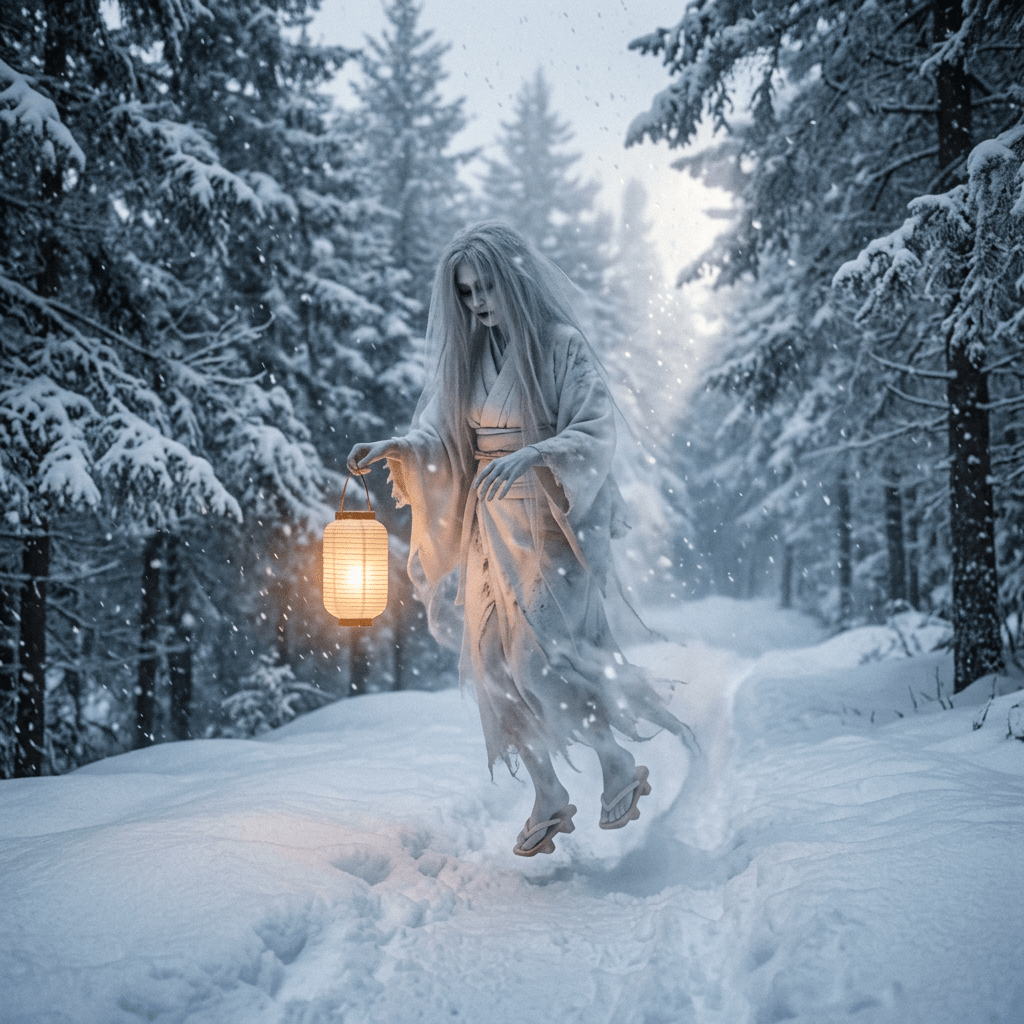
In Japanese folklore, Fuyūrei are restless spirits of the dead who remain trapped in the world of the living. Unlike ordinary ghosts, these apparitions are believed to linger because of powerful emotions such as rage, sorrow, revenge, or unfinished business. The word “Fuyūrei” is often associated with wandering spirits that drift between worlds, unable to find peace in the afterlife. Their stories have terrified Japan for centuries and continue to influence modern horror culture today.
Traditional depictions of Fuyūrei are instantly recognizable. They are usually portrayed wearing white burial kimono, with long unkempt black hair hanging over their pale faces. Their hands often dangle limply at their sides, and many are shown floating without visible legs. This iconic appearance became popular during the Edo period through Kabuki theater and ukiyo-e artwork, eventually shaping the image of ghosts throughout Japanese horror media.
According to legend, Fuyūrei commonly appear in places tied to their deaths or emotional suffering. Abandoned homes, forests, temples, graveyards, and lakes are said to be haunted by these spirits. Some are believed to seek vengeance against those who wronged them, while others simply wish for acknowledgment, proper burial rites, or closure before they can move on.
Japanese ghost stories frequently portray Fuyūrei as deeply tragic figures rather than purely evil entities. Many tales describe women betrayed by lovers, warriors who died in battle, or victims of murder returning from the grave. Their haunting presence reflects themes of grief, loneliness, and the belief that intense emotions can transcend death itself.
The influence of Fuyūrei can be seen throughout modern horror films and urban legends. Movies such as Ringu and Ju-On popularized the classic appearance of Japanese ghosts worldwide, introducing audiences to pale spirits with long black hair and unnatural movements. These films drew heavily from centuries-old folklore surrounding wandering spirits and curses.
Even today, stories of Fuyūrei remain deeply woven into Japanese culture. They appear during ghost festivals, in folklore collections, anime, manga, and paranormal investigations. Whether viewed as supernatural entities or symbolic representations of unresolved trauma, Fuyūrei continue to embody humanity’s fear of death and the unknown.
 The Hollow Files
Leave a comment