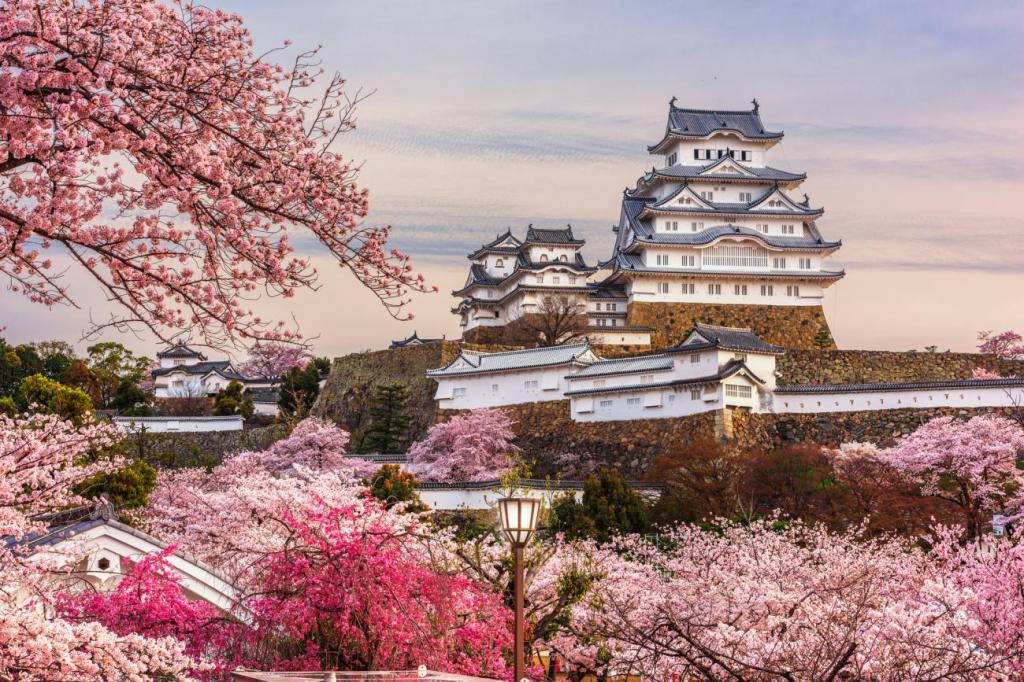
Rising above the city of Himeji in Hyōgo Prefecture, Himeji Castle is one of Japan’s most breathtaking and historically significant castles. Often called the “White Heron Castle” because of its brilliant white exterior and elegant, wing-like architecture, the fortress stands as a masterpiece of feudal Japanese design. Unlike many historic castles destroyed by war, earthquakes, or fire, Himeji Castle has survived for centuries almost completely intact, earning recognition as both a UNESCO World Heritage Site and a National Treasure of Japan.
Construction of the castle began in the 14th century, though the grand complex seen today was largely completed in the early 1600s during the Edo period. Built atop Himeyama Hill, the castle was designed not only to impress but also to defend. Its maze-like pathways, hidden gates, steep staircases, and strategic defensive systems were carefully engineered to confuse invading enemies. The castle complex contains more than 80 buildings connected by winding corridors and fortified walls, showcasing the ingenuity of samurai-era military architecture.
One of the castle’s most striking features is its dazzling white plaster exterior, which was originally intended to protect the structure from fire. The elegant layered roofs and curved gables give the castle a graceful appearance unlike the darker, more imposing castles found elsewhere in Japan. During cherry blossom season, the castle becomes even more magical as pink sakura trees bloom around the grounds, creating one of the country’s most iconic springtime scenes.
Like many ancient landmarks in Japan, Himeji Castle is surrounded by folklore and ghost stories. One of the most famous legends connected to the castle is the tale of Okiku, a servant woman accused of losing valuable plates belonging to her samurai master. According to the legend, she was tortured and thrown into a well within the castle grounds. Her spirit supposedly returned night after night, counting the plates in a mournful voice before screaming when the missing plate could not be found. This tragic ghost story inspired the famous Japanese horror tale Banchō Sarayashiki, which remains deeply connected to Himeji Castle’s haunted reputation.
Throughout history, the castle survived numerous dangers that destroyed many other Japanese fortresses. It escaped damage during World War II despite nearby bombing raids, and it withstood major earthquakes, including the devastating Great Hanshin earthquake of 1995. These remarkable survivals have only strengthened its reputation as one of Japan’s greatest cultural treasures.
Today, visitors from around the world travel to Himeji to walk through the castle’s wooden halls, climb its steep staircases, and admire panoramic views from the main keep. The castle’s preserved interiors offer a rare glimpse into the world of feudal Japan, while the surrounding gardens and moats add to the site’s timeless beauty. Whether admired for its architecture, history, or legends, Himeji Castle remains one of Japan’s most unforgettable landmarks.
 The Hollow Files
Leave a comment